 piddonkadonk
Somebody asked me recently how a person ends up doing AI work after 20+ years of festivals, touring, and software, and I gave the tidy answer, the one that makes a career sound like a plan. The honest version is that I said yes to things that looked slightly beyond me, and the only skill I built consistently was getting comfortable in rooms where I was the least qualified person present.
Here is the long version, with the parts I usually leave out.
The field
I was part of the founding team that built and launched the culturally iconic Electric Forest music festival. That sentence has been in my bio for years and it still does not carry the texture of it, which was mostly a lot of people standing in a field in Michigan arguing about where a path should go.
I booked roughly half the talent and helped design and curate the stages and themed areas. The booking half is the part people ask about. The stages and themed areas are the part I think about. You are building rooms for a person you have never met, who will walk into them at two in the morning, tired and delighted, and decide in about four seconds whether this place is theirs.
It grew to 100,000+ attendees annually. Scale was never the interesting number. The interesting number was how many people picked up trash they did not drop, which turned out to be a lot, because people take care of places they love. You cannot buy that with production budget. You get it by sweating details nobody is billing for.
The agency
At Madison House I led agency growth and operations on the artist management and booking side. A hundred-plus touring artists, which sounds like a roster and functions like a small city with a routing problem.
People imagine this job as phone calls with famous people. It is mostly calendars. It is holding a date in three markets while a support slot gets confirmed, and knowing which promoter returns a call on a Sunday, and having the conversation nobody wants to have at the exact moment it will still do some good.
Artist development is a long game and the arcs look nothing alike. A club run needs completely different scaffolding than a festival slot, and working the Mobb Deep catalog taught me more about how legacy value compounds than any strategy deck I have ever sat through. Later, watching an artist like Thundercat build an audience that came for the musicianship reminded me that patience is a strategy, not a delay.
The very loud night
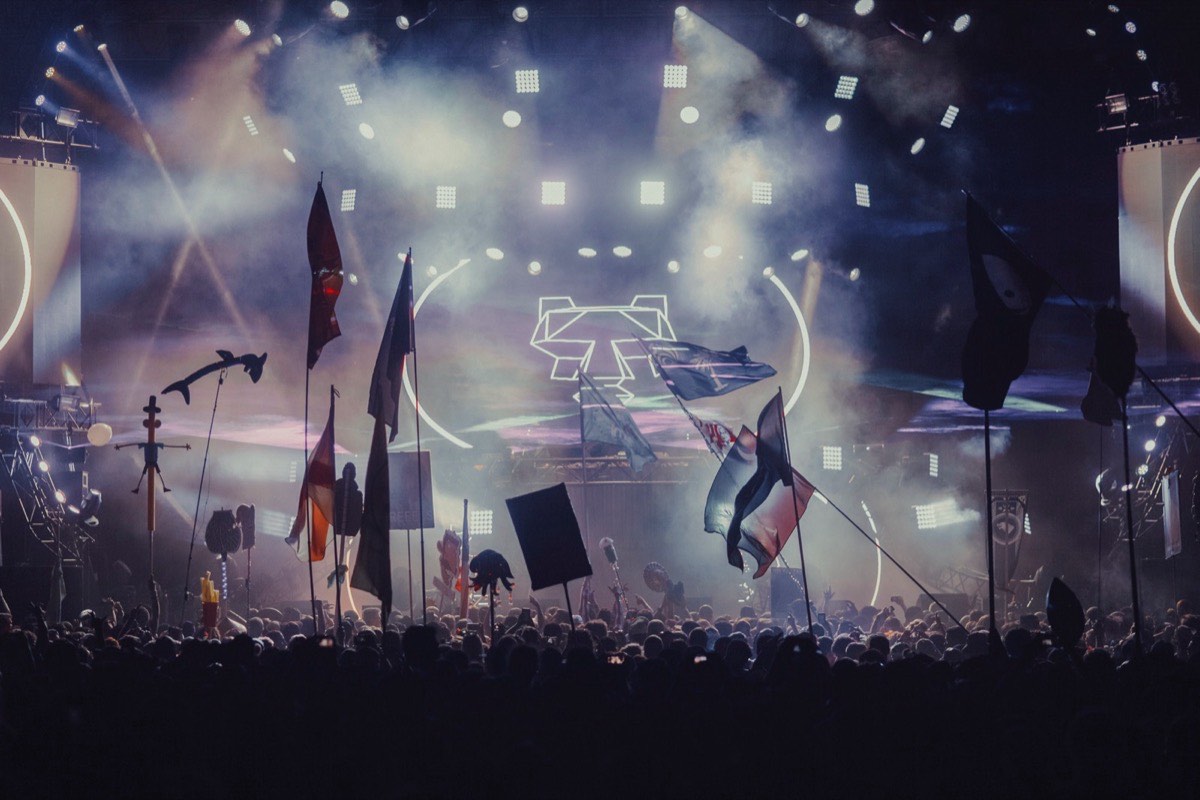
We sold out Madison Square Garden with Bassnectar.
I have written and deleted three different paragraphs trying to describe standing in that building with the lights down and the room full. What I remember most clearly is the hallway beforehand, holding a laminate, running the same three worries on a loop. Then the doors opened and the worries became irrelevant, which is how it goes every single time and which I have never once managed to believe in advance.
That night is also the clearest proof of something I say to every operator now: the glamorous outcome is made entirely of unglamorous inputs. Advances, settlements, routing, seventeen emails about a load-in door.
The software
Somewhere in the middle of all that, I helped build and license Madmin, an early cloud-based CRM for the music industry. A proprietary booking CRM, built because the tools we had were making us worse at our jobs.
This is where my career quietly turned. I had assumed software was made by a different species of person. Then I sat in requirements meetings and realized the hardest part was not the code, it was knowing which button needed to exist, and I knew that cold because I had needed the button at 1am on a Tuesday with a deal falling apart.
Operators make good product people. If you have felt the pain you can describe it precisely, and precise descriptions of pain are most of what a product team needs.
What the yeses were for
I did not plan any of it. Each step was somebody asking whether I could handle a thing I had not done before, and me deciding that figuring it out in public was better than the alternative.
The through line turned out to be partnership work. Find people doing something good. Get them the room, the budget, and the cover they need. Step back and let it be theirs. That is the same job whether the deliverable is a stage in a forest, a tour routing, a CRM, or an AI system that has to behave itself under pressure.
So now I do AI solutions consulting and agent quality work, and I am writing Coursera courses on deal-making, business, and marketing, which is mostly an attempt to hand over the parts of this that took me a decade to learn and about twenty minutes to explain.
If there is advice buried in here, it is small. Say yes to the thing one size too big. Take notes while you are confused, because the confusion is the most valuable and most perishable thing you own. And be good to the people in the hallway before the doors open. They are the whole job.
Working on something in this territory? Come say hello.